 № 01
№ 01Sourcing
Named farms, short drives.
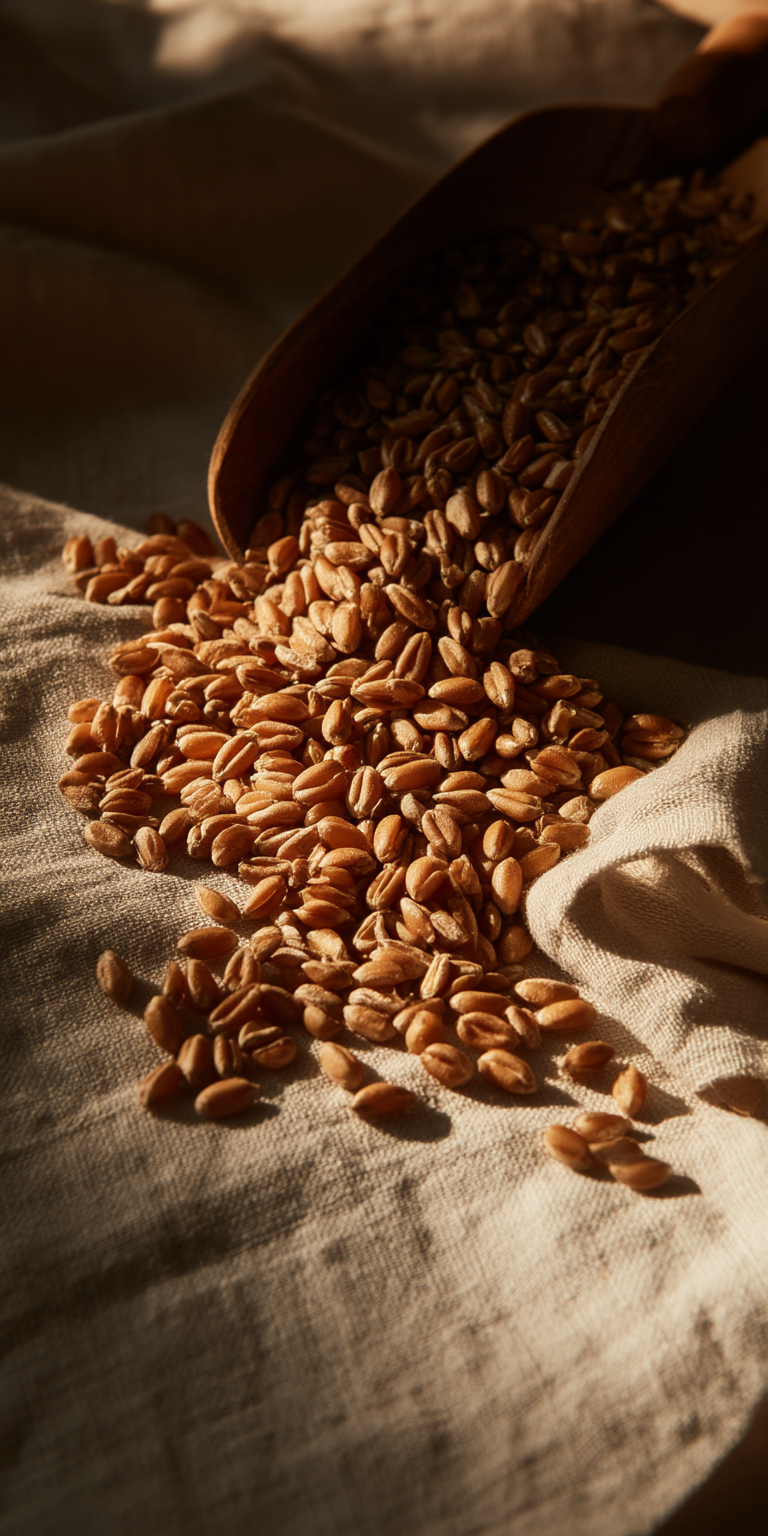
Hard red winter wheat, soft white, heirloom Turkey Red — grown by five farmers we can pick up the phone and call. Regenerative practices, no glyphosate desiccation, never gassed in storage.
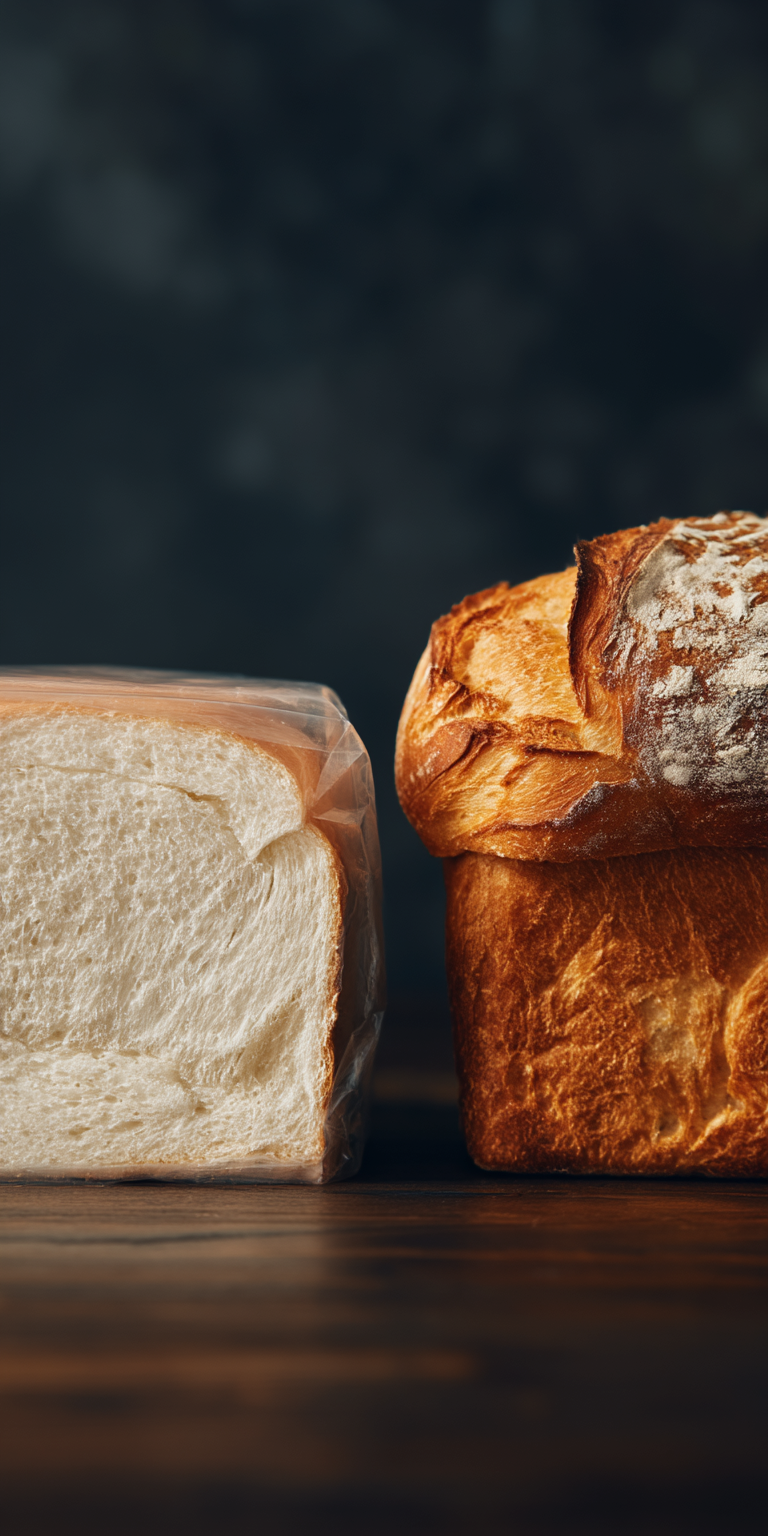
Most of what passes for flour in this country was never meant to feed you. It was meant to ship cheap, stack on a pallet, and sit on a shelf for a year without going off. To get it there, they had to take the food out of it.
Rolled on steel, stripped of the bran and the germ, bleached to the color of a bedsheet, then re-fortified with a chemistry-set premix so the label can still say enriched. It is a clever trick. It is also why a sandwich makes half the people we know feel terrible.
In 1760, a timber-frame watermill on the Musconetcong River in Long Valley, New Jersey started grinding grain for its community. For roughly 160 years it fed neighbors — and, during the Revolution, Washington’s soldiers. In 1918, the wheel finally stopped.
In 2000, we found it dilapidated but still standing. Piece by piece, beam by beam, we numbered every timber and carried it 1,700 miles south to Waco, Texas. The water wheel turns again. The granite stones crush grain once more. The smell of fresh flour is back in the air.
We have not gotten bigger on purpose. We got better. We know the partner farms growing the grain we mill. We still bag every order by hand. We still answer the phone when you call it — that is us on the line, not a call center.
Seven things we will not be talked out of — by a distributor, a consultant, a food scientist, or anyone trying to convince us there is a more efficient way to feed a family.
Not a white powder stripped, bleached, and topped back up with a vitamin premix. A living ingredient — whole berry, bran and germ still in it, milled the week you get it.
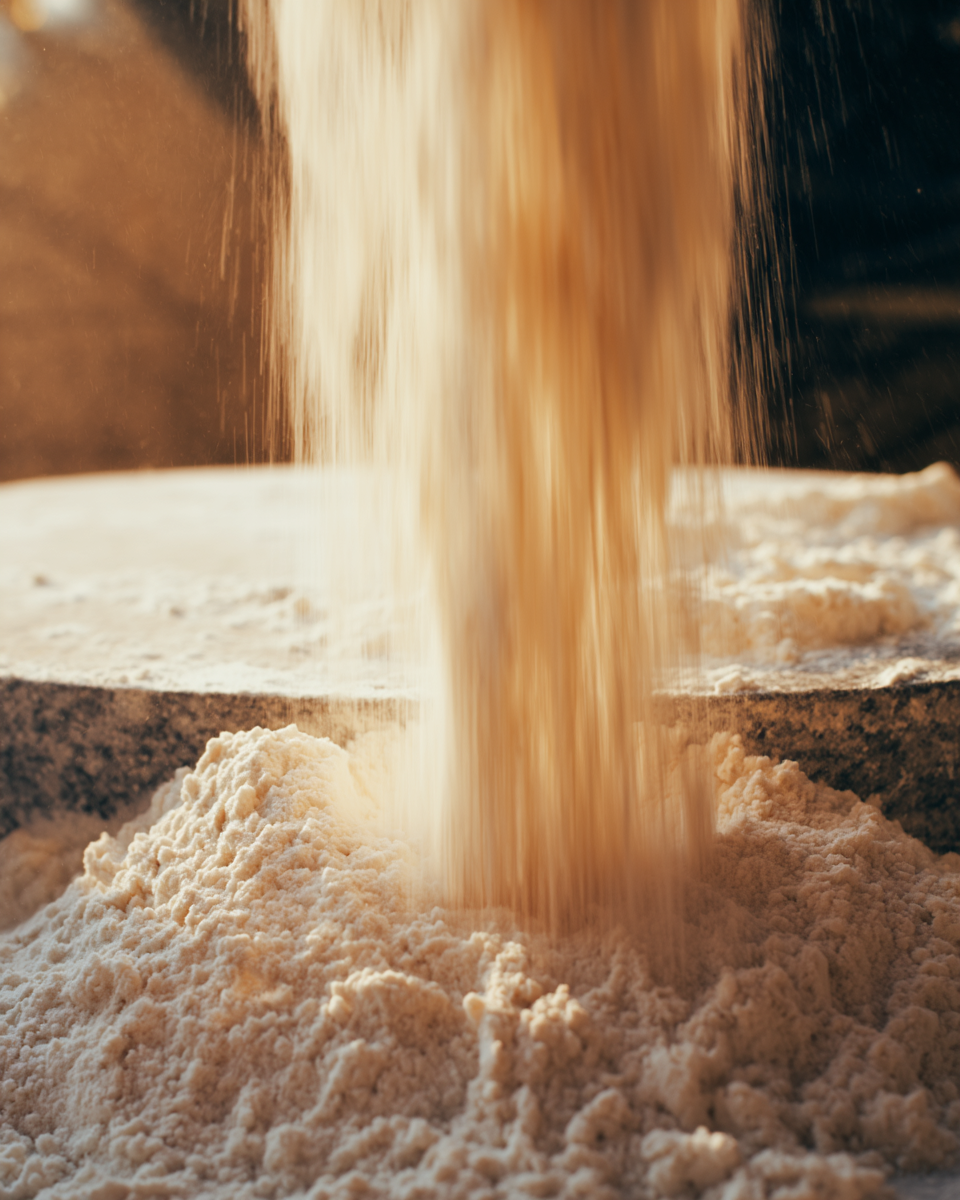
We grind on French burr stones, slowly and cool. The germ stays intact, the oils stay alive, and the flour tastes like the wheat it came from. Faster is not better.
We mill in small runs, close to when you order. No silo warehousing, no months sitting on a shelf, no oxidization dulling the flavor. The bag you get was ground recently — not last season.
No bromate, no enrichment, no dough conditioners, no seed oils, no "natural flavors." If our grandmother would not recognize it on the label, it does not go in the sack.
Our grain comes from partner farms in the United States — growers we can call by name, committed to the same quality we are. The bag tells you the variety. The lot stamp tells you when it was milled.
Ingredients on the front, in plain English. No marketing words that mean nothing. If we cannot explain it at the kitchen table, we will not put it on the bag.
We are not a brand with a supply chain. We are a mill with a family behind it. What we make is meant to be kneaded, baked, shared, and eaten — not positioned.
A modern flour mill has thirty-four processing stages between the grain and the bag. Ours has three. That is not a shortcut — that is the whole point.
№ 01Hard red winter wheat, soft white, heirloom Turkey Red — grown by five farmers we can pick up the phone and call. Regenerative practices, no glyphosate desiccation, never gassed in storage.
 № 02
№ 02Whole berry through the stones in one pass. No heat build-up, no germ killed off, nothing sifted out. The bran, the germ, the endosperm — all of it, in the bag.
 № 03
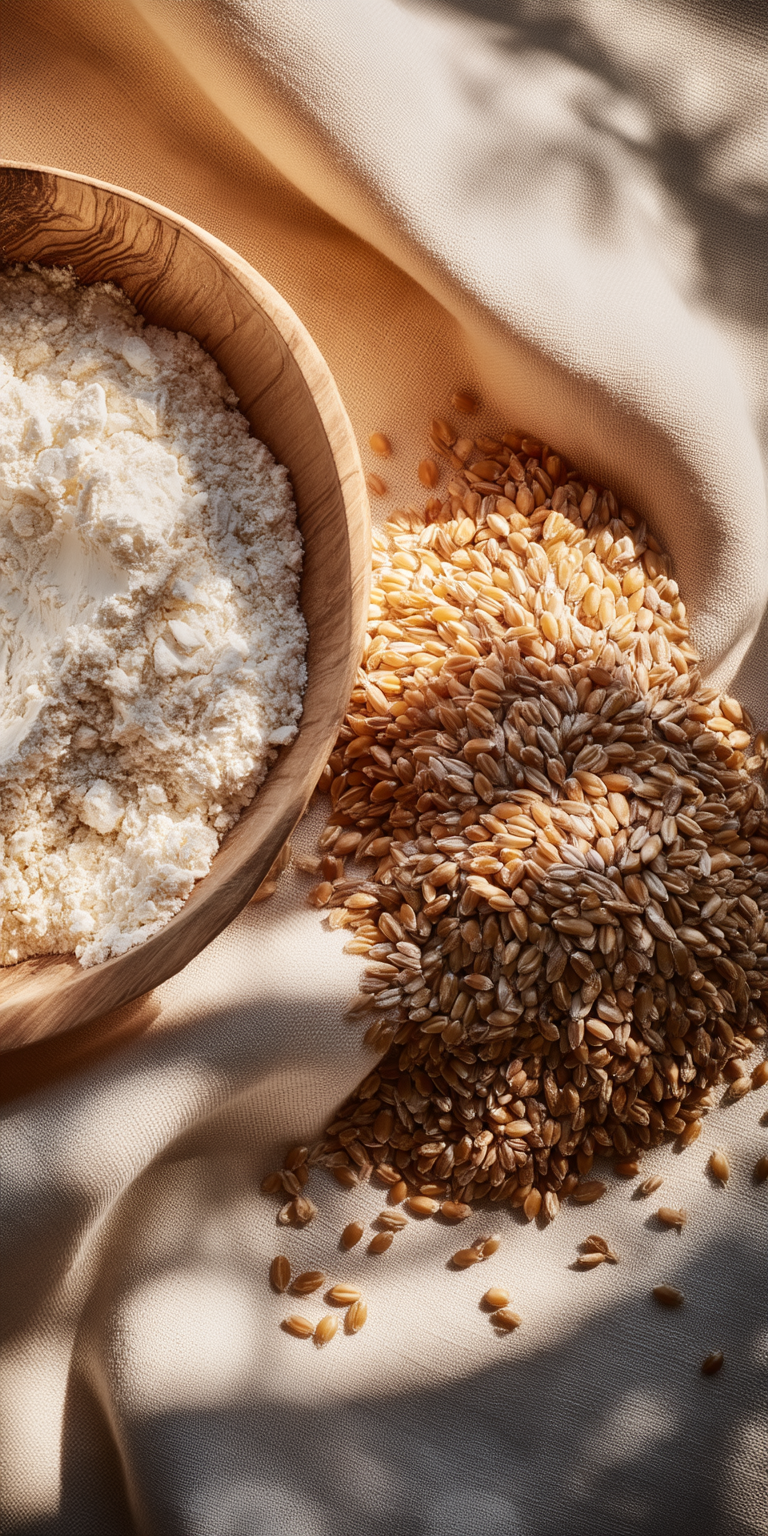
№ 03Every sack is bagged by hand and marked with a lot stamp — so you can trace it back to the variety, the mill run, and the person who filled the bag.
Real food, made by people whose
names you can learn, for families
who are done settling.
The family trying to get back to cooking at home. The parent reading the label on the back of the bag for the first time and feeling a small, useful kind of anger. The baker who remembers what bread used to taste like and wants that back.
We are not for everyone. We are for the people who are done settling — who figured out the industrial food system was never built with their kitchen in mind, and decided quietly that they would find another way.
If that is you, the sack is on the counter. Come on in.
That is the whole manifesto. Four syllables. It was time when we started, and it is still time now. Join us, or don’t. Either way we will be at the mill on Tuesday.