MethodCook it step by step
- 1
Preheat oven to 450 degrees Fahrenheit. Line a baking sheet with parchment paper.
- 2
Whisk flour, baking powder, baking soda, and salt in a large bowl.
- 3
Add cold cubed butter and cut it in until the mixture resembles coarse meal with pea-sized pieces.
- 4
Pour in cold buttermilk and stir gently with a fork until just combined.
- 5
Turn onto a floured surface. Pat into a 3/4-inch thick rectangle and fold in thirds like a letter.
- 6
Pat out again and fold one more time, then pat back to 3/4-inch thick.
- 7
Cut biscuits with a 2 1/2-inch round cutter. Press straight down so the layers can rise evenly.
- 8
Place biscuits touching on the baking sheet. Brush tops with a little buttermilk.
- 9
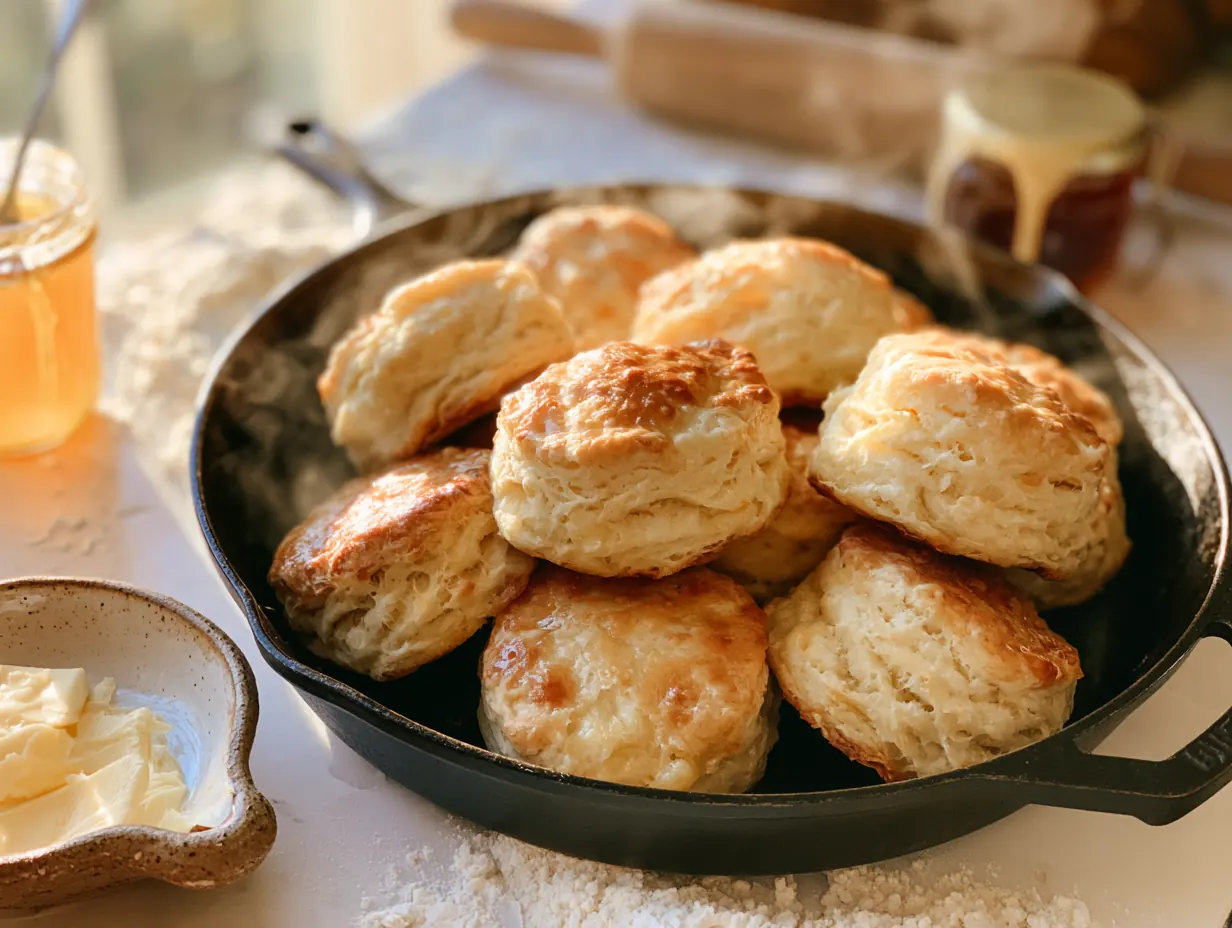
Bake for 12 to 15 minutes until tall and golden. Serve warm with butter and honey.
From the Mill KitchenA Few Notes Before You Bake
Flaky Buttermilk Biscuits benefits from the same care most stone-ground bakes need: a little attention to hydration, rest time, and ingredient choice. Keeping that guidance close to the method makes the first bake easier and the second one even better.
Bake to the rhythm of fresh-milled flour
Stone-ground flour often hydrates a little differently than highly standardized flour, so the dough or batter may need a short rest before you decide it is too wet or too dry. Give the grain a moment to absorb liquid before making big adjustments.
That matters most for breads, biscuits, tortillas, and pizza dough because structure is built over time. Gentle mixing, a proper rest, and watching texture cues usually give a better result than forcing the recipe to behave exactly like a fast commercial formula.
Why Sifted Pastry Flour is the right match
Sifted Pastry Flour gives this recipe the flavor anchor it needs. The goal is not just to finish the bake, but to keep enough grain character in the final result that the flour, cornmeal, oats, or grits still taste present after butter, sugar, cheese, fruit, or savory toppings join in.
For cookies, cakes, muffins, scones, and doughnuts, the ingredient choice also shapes tenderness. A softer flour keeps the crumb pleasant, while whole-grain character keeps the bake from tasting one-dimensional.
Make the next batch even better
Once you make a recipe like this successfully, the next question is usually storage and repeatability. Let the finished bake cool before wrapping, and store any extra grain products in a cool pantry or freezer so the second round still tastes fresh.
The related links below make it easy to restock the same ingredient, compare a few neighboring grains, or pick the next recipe to try without losing your place.